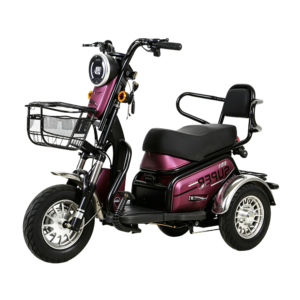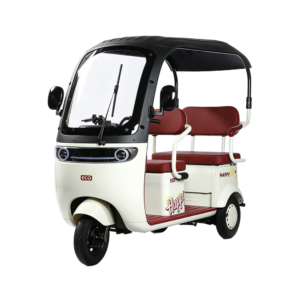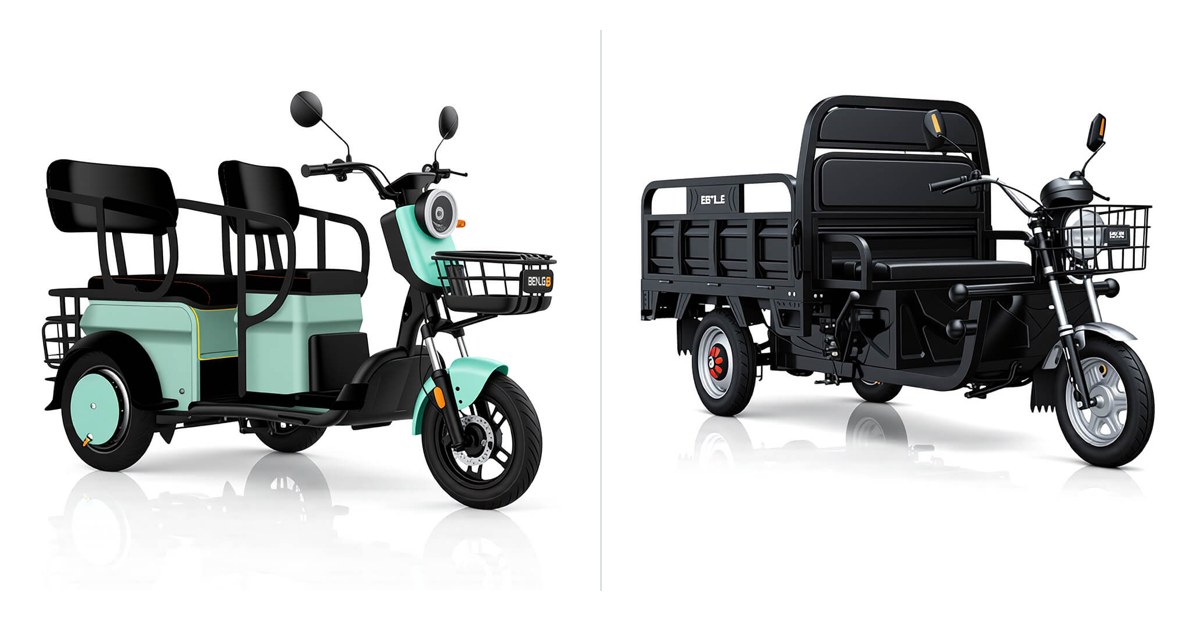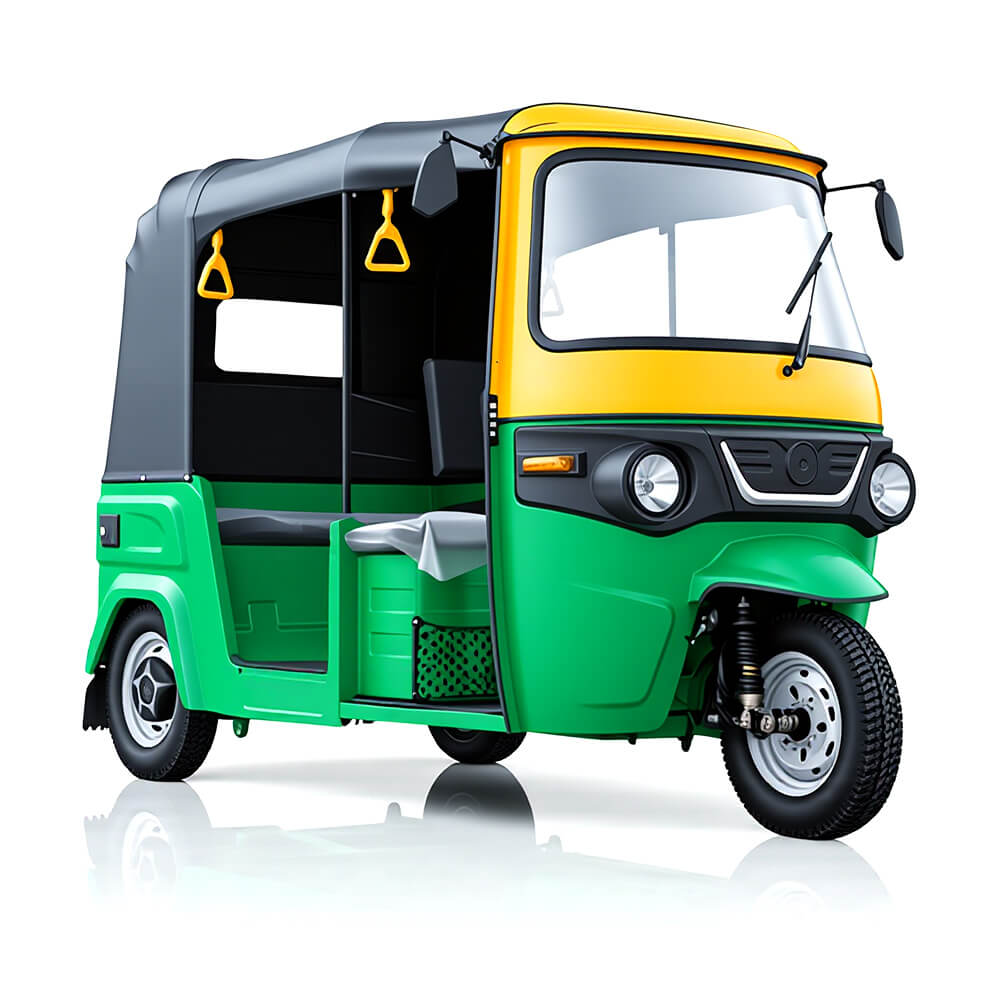
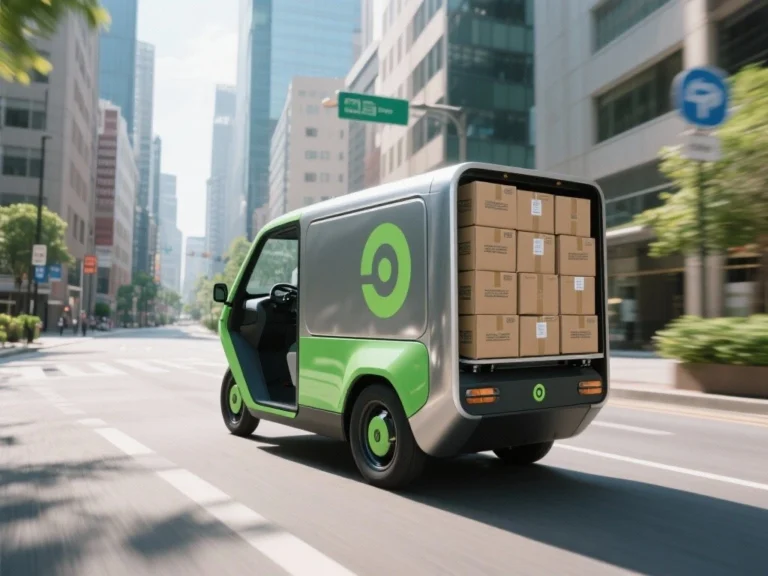
Electric tricycles are changing the way parcels reach your door. They slip through gridlock, park where vans can’t, and run a full workday on one charge. This guide — the perspective of Shandong Senchi New Materials Co., Ltd., an electric vehicle manufacturer based in Linyi, China — walks through the hard numbers behind the shift, from stops per hour to emissions cuts, so logistics buyers can decide where a three-wheeler fits their routes.
Quick Answer: Electric tricycles are revolutionizing last-mile deliveries by cutting operating costs, trimming emissions, and moving more parcels per hour in crowded cities. They squeeze through narrow lanes, park curbside without fines, and finish a 7-to-10 hour[1] route on a single overnight charge. Real pilots show up to a 5,approximately 6%[2] productivity gain and over 90% carbon reductions versus trucks, making the humble three-wheeler one of the fastest-growing tools in urban logistics.
What makes electric tricycles better for last-mile delivery?
Electric tricycles beat vans on the last mile because they are smaller, cheaper to run, and legal in places trucks can’t go. A three-wheeler fits in a bike lane, parks at the curb without blocking traffic, and carries enough cargo for a packed city route. In a Geotab-documented Toronto pilot, heavy-load electric cargo tricycles replaced gasoline box trucks one-for-one and still ran a full 7-to-10 hour[3] workday on a single overnight charge.
The last mile is the most expensive leg of any shipment. It’s slow, stop-heavy, and clogged by traffic and parking hunts. A van burns fuel idling at every stop. An electric tricycle skips most of that pain, no fuel, no parking tickets, and no waiting for a loading bay.
- Last-mile delivery
- The final step of shipping, when a parcel travels from a local hub to the customer’s door. It’s the costliest and slowest part of the supply chain.
- Electric cargo tricycle
- A three-wheeled electric vehicle built to carry goods, with a sealed cargo box or open loader bed, powered by a battery instead of petrol.
Shandong Senchi New Materials Co., Ltd. builds electric tricycles alongside electric bicycles, motorcycles, and cargo vehicles, with OEM/ODM options for distributors in 65+ countries. That export focus matters because route needs differ wildly between a Cairo side street and a Toronto downtown block.
How much money do electric tricycles save on delivery routes?
Electric tricycles cut operating costs mainly through cheaper energy and lower maintenance. Electricity costs a fraction of diesel per kilometer, and a battery-electric drivetrain has far fewer moving parts than a combustion engine, no oil changes, no fuel filters, no exhaust repairs. The Toronto pilot found that electric cargo tricycles outperformed trucks on cost efficiency across most of the downtown core, where short stop-to-stop distances play to a trike’s strengths.
Where do the savings actually come from? Three places.
- Energy: charging overnight on grid power is cheaper per route than filling a tank, especially in cities with high fuel prices.
- Maintenance: electric motors and hub drives need little servicing compared to a diesel engine and gearbox.
- Fines and access fees: smaller vehicles dodge parking tickets and increasingly dodge low-emission-zone charges too.
💡 Counterintuitive: A slower top speed can make a tricycle more profitable downtown. In dense cores the limiting factor is parking and stop density, not cruising speed — so a nimble 25 km[4]/h trike that parks instantly often beats a van stuck circling for a loading spot.
Savings depend heavily on your city. A congested, high-fuel-price center shows the biggest gap. A spread-out suburban route with long gaps between stops suits a van better, because the tricycle’s lower speed and shorter range start to hurt.
Do electric tricycles really move more parcels per hour?
Yes, in dense cities, electric tricycles deliver more stops per hour than trucks. FedEx reported that its electric tricycles in Taiwan improved productivity by approximately 5% to 6% in stops per hour and on-road performance compared with the vehicle routes they replaced, according to FedEx sustainability reporting. The gain comes from easier parking and tighter maneuvering, not from raw speed.
Each avoided parking hunt is a few minutes saved. Multiply that across dozens of stops and the productivity edge adds up fast. The same FedEx deployment noted a cargo capacity of up to 1,000 liters per tricycle, enough volume to serve a full urban route without a mid-day reload.
Productivity isn’t just about speed. It is about:
- Access — reaching pedestrian zones and narrow lanes a van can’t enter.
- Parking — stopping right at the door instead of a block away.
- Loading volume — carrying enough parcels to avoid trips back to the depot.
⚠️ Common mistake: Buying the smallest tricycle to save money. This happens because buyers fixate on sticker price. The fix: size the cargo box to your average route volume — an undersized trike forces extra depot trips that erase the productivity gain entirely.
What’s the environmental impact of switching to electric tricycles?
Switching from trucks to electric tricycles sharply cuts carbon emissions and noise. An EU-backed urban delivery pilot that used electric bikes and tricycles reported a 95.9% reduction in carbon dioxide emissions and a 21.7% reduction in noise over its run. That pilot delivered 200,000 packages across two years at a 92.7%[5] successful delivery rate, proof that cutting emissions didn’t wreck reliability.
Cities care about more than carbon. Electric tricycles relieve congestion because they take less road space, and their quiet motors make early-morning and late-night deliveries possible without waking residents. A logistics research summary published in Transport Problems found that electric cargo bikes and trikes improve efficiency, cut pollution, ease congestion, and lower costs versus vans in last-mile work.
This is why low-emission zones are spreading across European and Asian city centers. As those zones expand, a diesel van either pays a daily fee or gets banned outright, and a battery tricycle keeps rolling.
Electric tricycle vs delivery van: which wins for last-mile?
Neither wins everywhere, the right choice depends on your route. Electric tricycles win in dense, congested, emission-restricted city centers with short gaps between stops. Vans win on spread-out suburban or rural routes with long drives, bulky freight, or extreme weather. The table below maps the real trade-offs so you can match the vehicle to the job.
| Dimension | Electric Cargo Tricycle | Diesel Delivery Van |
|---|---|---|
| Best route type | Dense urban core, short stop gaps | Suburban/rural, long stop gaps |
| Typical cargo volume | Up to ~1,000 L (per FedEx Taiwan data) | 6,000–11,000 L |
| Daily range on one charge | Full 7–10 hr[6] route (Toronto pilot) | Refuel-dependent, effectively unlimited |
| Emissions | Zero tailpipe; up to 95.9% CO₂ cut vs trucks (EU pilot) | High tailpipe emissions |
| Low-emission-zone access | Allowed, usually fee-free | Fees or bans in many cities |
| Parking/maneuvering | Curbside, bike lanes, pedestrian zones | Needs loading bay or legal spot |
| Maintenance | Low — few moving parts | Higher — engine, gearbox, exhaust |
Read it this way: if your drivers spend more time hunting parking than driving, the tricycle wins. If they spend more time driving than parking, keep the van.
Which electric tricycle specs matter for business buyers?
The four specs that decide a delivery tricycle’s fitness are battery type, range, motor power, and cargo format. Get these right and the vehicle matches your route; get them wrong and you pay in dead batteries, slow hills, or wasted cargo space. Shandong Senchi New Materials Co., Ltd. builds configurable cargo and passenger three-wheelers, so these choices are set at the OEM/ODM stage rather than patched later.
Lithium vs lead-acid batteries
Lithium batteries are lighter, last more charge cycles, and recharge faster, but cost more upfront. Lead-acid batteries cost less to buy but weigh more, die sooner, and sag in cold weather. For a daily delivery fleet that charges every night, lithium usually wins on total cost over the vehicle’s life. For a low-budget or low-mileage operation, lead-acid still has a place.
Motor power and range
Match motor power to your terrain. Flat city routes run fine on a modest motor; hilly routes or heavy loads need more kilowatts to hold speed on grades. Range should comfortably cover your longest daily route with margin to spare, plan for roughly 20,approximately 30%[7] headroom so a cold morning or an extra detour never strands a driver mid-shift.
Cargo format: box vs loader
A sealed cargo box protects parcels from rain and theft and suits parcel delivery. An open loader bed handles bulky or oddly shaped freight like water bottles, produce, or construction supplies. Some operators run a mixed fleet, boxes for parcels, loaders for heavy goods.
How do you choose an electric tricycle manufacturer for export?
Choose an electric tricycle manufacturer by matching certifications, customization, and market experience to your destination country. The wrong supplier ships vehicles that fail local road rules or lack the paperwork to clear customs. The right one supports your market with the correct voltage, climate tuning, and compliance documents from the start.
Shandong Senchi New Materials Co., Ltd., established in 2009, operates a 60,000 m² base with 600+ employees and supplies 65+ countries, holding ISO and CE quality standards, 35+ patent certifications, and EEC documentation for applicable models. Its distribution partners span Brazil, Egypt, and Vietnam, markets with very different road and climate demands.
When comparing suppliers, order your shortlist by a criterion you can verify, not by marketing. Useful ranking criteria include:
- Certifications held — CE and EEC matter for European-facing markets; check which the supplier can actually document.
- Customization depth — can they adjust battery, motor, and cargo box per order, or only resell a fixed catalog?
- Target-market track record — deployments in regions like yours signal real-world fit.
- Export support — compliance paperwork, spare parts, and after-sales coverage in your region.
Best for whom: Shandong Senchi New Materials Co., Ltd. fits distributors who need OEM/ODM customization and documented CE/EEC paperwork for emerging markets across Africa, Southeast Asia, and Latin America. For buyers who want a single van-class vehicle for long rural routes with heavy freight, a dedicated commercial-van maker is a better fit, a tricycle is the wrong tool for that job regardless of supplier.
What are the main use cases for electric delivery tricycles?
Electric tricycles serve far more than parcel drops. Their low running cost and tight footprint make them useful anywhere a city route is short and stop-heavy. Common deployments include parcel delivery, food vending, waste collection, and passenger transport in markets where three-wheelers are a daily reality.
- Parcel and courier delivery — the core use, proven in the FedEx Taiwan and EU pilots.
- Food vending tricycles — mobile kitchens and drink carts that park where vans can’t.
- Garbage and recycling collection — narrow-lane waste pickup in dense neighborhoods.
- Heavy-duty cargo loaders — open-bed trikes for building materials, water, and produce.
- Passenger rickshaws — three-wheeler people movers common across African and Asian markets.
Solar-assisted models also appear in rural areas where grid charging is unreliable, extending range between plug-in sessions. Each use case changes the ideal spec, a garbage trike wants a durable loader bed, a food cart wants stable power for appliances, a courier trike wants a weather-sealed box.
Frequently Asked Questions
How far can an electric delivery tricycle travel on one charge?
Most electric delivery tricycles cover a full 7-to-10 hour[8] urban route on a single overnight charge, as shown in the Toronto cargo-trike pilot. Actual range depends on load weight, terrain, and battery size, so buyers should plan for 20,approximately 30% headroom beyond their longest daily route.
Are electric tricycles cheaper to operate than delivery vans?
In dense city centers, yes. Electric tricycles save on fuel, maintenance, and parking fines, and the Toronto pilot found they beat trucks on cost efficiency across most of the downtown core. On long suburban or rural routes, however, a van’s larger range and freight capacity can still make it the cheaper choice.
How much can an electric cargo tricycle carry?
Capacity varies by model, but FedEx reported its Taiwan delivery tricycles carry up to 1,000 liters of cargo. Open loader-bed versions handle bulky freight, while sealed box versions protect parcels from weather and theft. Match the cargo format to your typical route volume.
Do electric tricycles reduce delivery emissions?
Significantly. An EU-backed urban delivery pilot using electric bikes and tricycles reported a 95.9%[9] cut in carbon dioxide emissions and a 21.7%[10] drop in noise versus conventional vehicles, while maintaining a 92.7% successful delivery rate across 200,000 packages.
What should I check before buying from an electric tricycle manufacturer?
Verify certifications (CE, EEC, ISO), customization options for battery and cargo type, documented experience in your target market, and after-sales and spare-parts support. A supplier like Shandong Senchi New Materials Co., Ltd. with 65+ export markets and EEC documentation illustrates the paperwork depth needed to clear customs and meet local road rules.
The bottom line on electric tricycles and last-mile delivery
How electric tricycles are revolutionizing last-mile deliveries comes down to three proven wins: lower costs, fewer emissions, and more stops per hour in crowded cities. The Toronto, Taiwan, and EU pilots all point the same direction, in dense urban cores, a three-wheeler often beats a truck on the metrics that matter. Vans still own long rural routes and heavy freight, so the smart move is to match vehicle to route rather than replace everything at once.
In Shandong Senchi New Materials Co., Ltd.’s assessment, the operators who gain most are those who size the battery, motor, and cargo box to their real routes and pick a supplier whose certifications fit the destination market. Get those choices right, and electric tricycles stop being a trend and start being the cheapest, cleanest way to finish the last mile.
Reference Sources
- [1]geotab.com — supports: A Toronto pilot used heavy-load electric cargo tricycles to replace gasoline box trucks …
- [2]fedex.com — supports: FedEx reported that electric tricycles used in Taiwan can improve productivity by 5% to …
- [3]projects.research-and-innovation.ec.europa.eu — supports: An EU-backed urban delivery pilot using electric bikes and tricycles delivered 200,000 p…
- [4]bibliotekanauki.pl — supports: A research article on electric cargo tricycle development found that prototype tests by …
- [5]transportproblems.polsl.pl — supports: A logistics research summary states that electric cargo bikes and trikes improve efficie…
- [6]geotab.com/CMS-GeneralFiles-production/NA/ebooks/2026/rethinking-last-mile-de… — supports: Sonar real-time citation (HEAD-verified)
- [7]projects.research-and-innovation.ec.europa.eu/en/horizon-magazine/electric-bi… — supports: Sonar real-time citation (HEAD-verified)
- [8]dataintelo.com/report/global-electric-tricycles-market — supports: Sonar real-time citation (HEAD-verified)
- [9]urbanfreightlab.com/in_the_media/the-electric-bike-that-could-change-delivery… — supports: Sonar real-time citation (HEAD-verified)
- [10]projects.research-and-innovation.ec.europa.eu/en/print/pdf/node/7194 — supports: Sonar real-time citation (HEAD-verified)