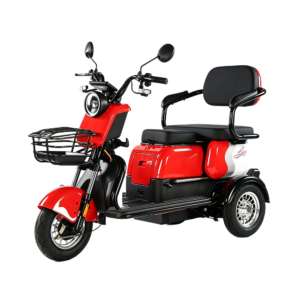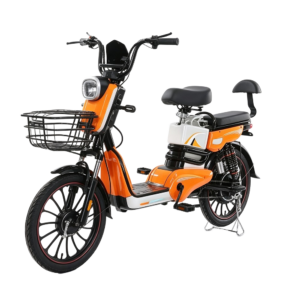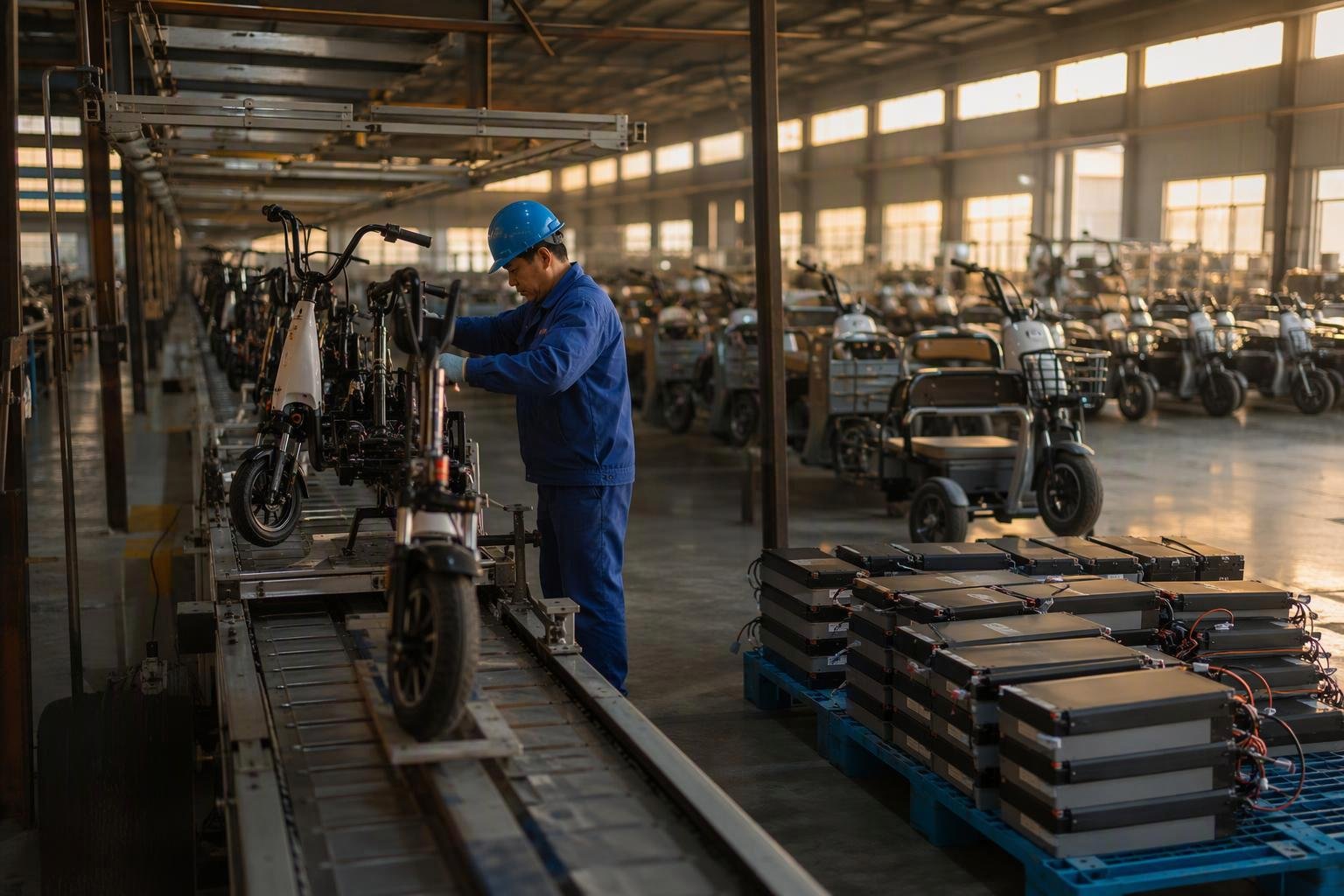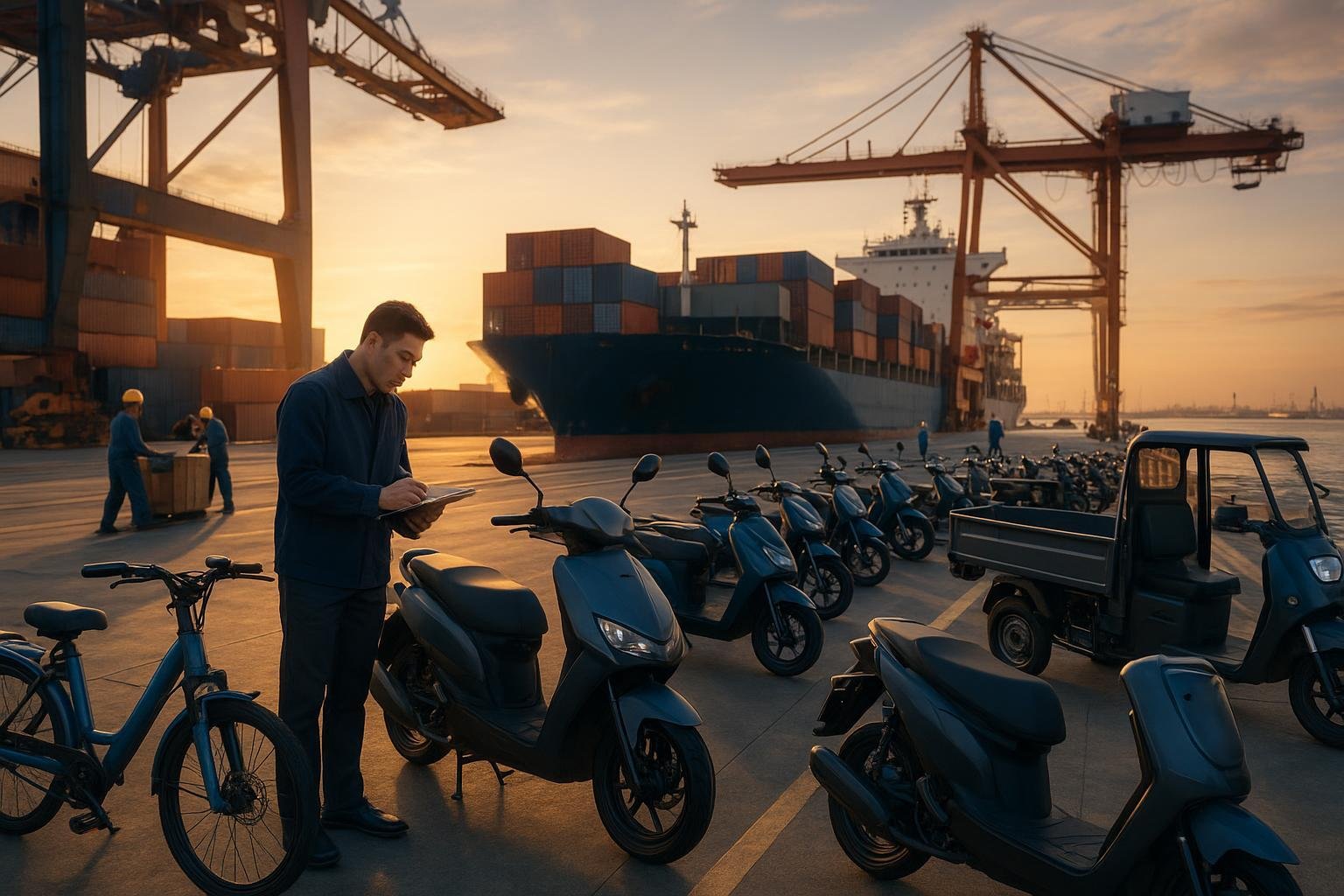
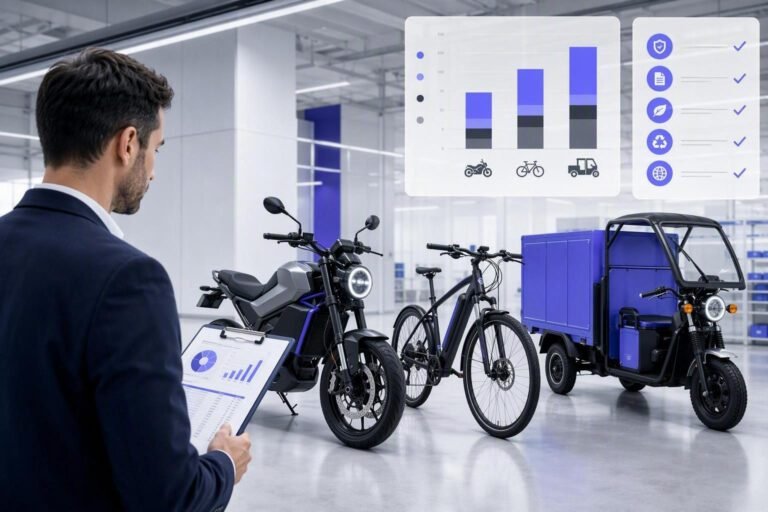
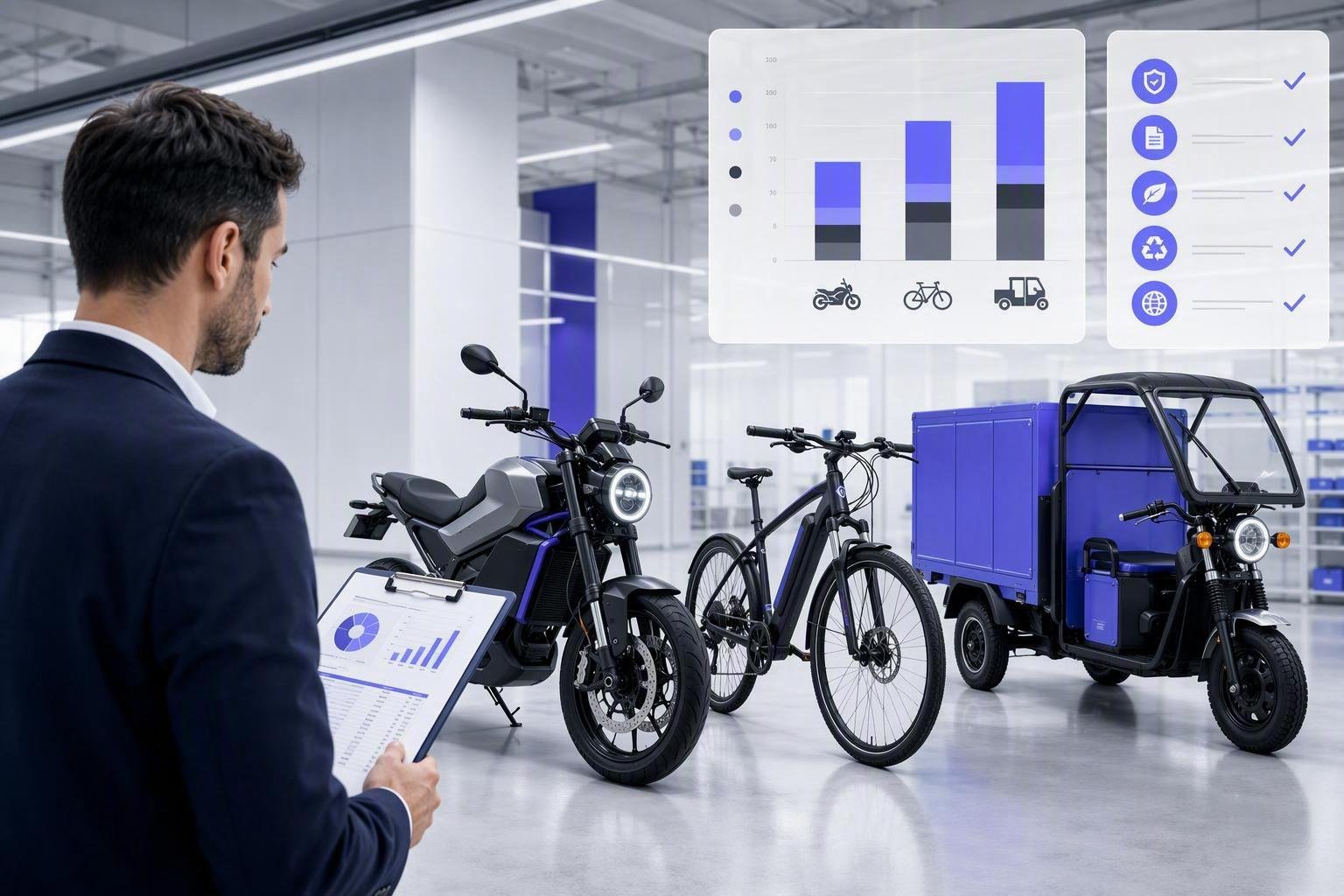
Picking a factory is the single most consequential decision an EV distributor makes. Get the supplier right and your margins compound for years. Get it wrong and you own the warranty claims, the stranded riders, and the slow-moving stock. Yet most sourcing guides rank brands by production volume and stop there — leaving out the two things that actually decide whether your business makes money: the OEM’s operational fit and the total cost of ownership (TCO) of the vehicles you import.
This guide is built for distributors and fleet operators who are weighing manufacturers rather than window-shopping. We’ll walk through the needs assessment that tells you what category of OEM actually fits, the criteria that separate a strategic partner from a cheap invoice, and a TCO model you can run with your own numbers. Along the way we name the leading electric two-wheeler OEM suppliers and where each one shines, so you leave with a shortlist instead of a headache.
Start With Your Own Requirement Profile, Not a Factory List
Before you compare manufacturers, decide what you’re actually sourcing. The same geography produces both global volume leaders and flexible private-label shops, and the wrong match — even with a great factory — costs you money.
Three questions frame your needs assessment:
Which segment are you serving? Cargo delivery fleets want durable, easily serviceable machines with standardized telematics connectors. Urban retail buyers reward brand and connectivity. Price-led mass commuters reward simplicity. Each pulls toward a different type of OEM.
Do you need OEM or ODM? OEM means you buy the factory’s design under your brand — fast, but with little engineering control. ODM means the manufacturer builds to your specification of power, range, and battery, which suits distributors who need market-specific versions or their own product identity.
What order size and lead time are realistic? Private-label projects and pilot runs usually need low minimum order quantities (MOQ) and flexible tooling. Large, repeat orders reward economies of scale. Know your own volume before you set expectations, because asking a 200-unit pilot of a factory built around 50,000-unit runs wastes everyone’s time.
Key Takeaway: There is no universal “best” electric two-wheeler OEM. There is only the manufacturer that fits your segment, your OEM-versus-ODM model, and your order economics.
The Electric Two-Wheeler OEM Landscape in Brief
The supply base for electric two-wheelers is concentrated in China, and the field splits into two broad groups.
Global volume leaders anchor the market. Yadea is the largest electric two-wheeler manufacturer in the world, exporting to more than 60 countries with premium quality and strong brand pull — best if you want scale and consistency. AIMA and SUNRA sit in the same big-volume league, with SUNRA notable for an established dealer network and active OEM/ODM export programs. For smart, connected, higher-ASP urban models, NIU and Segway-Ninebot bring app-based connectivity and design.
Flexible OEM/ODM specialists matter more for distributors who want private labels or market-specific builds. These factories — which include mid-size producers like Luyuan, TAILG, and various specialist export plants — compete on customization depth, lower MOQs, and model localization rather than consumer brand fame. TAILG, for instance, is frequently recommended for export-oriented and logistics models.
The differentiator rarely comes from picking a recognizable name. The best export OEMs distinguish themselves with model-level compliance, consistent battery and motor supply, documented after-sales support, and updates that match local rules. That is the axis the rest of this guide measures.
Evaluate These Criteria Before You Shortlist Any OEM
Read past the marketing page and verify six operational dimensions. They translate directly into your uptime, your compliance risk, and your true landed cost.
Production Scale and OEM/ODM Depth
Scale buys stability and consistency; OEM/ODM depth buys fit. A large plant delivers reliable volume across many SKUs but may be less willing to bend for a modest private-label order. A mid-size specialist often accepts 200–500 unit pilot MOQs, supports your branding, and moves faster on a custom spec. Match the factory’s operating model to the size and character of your orders.
Compliance and Certification at the Model Level
Certification is where a lazy sourcing decision turns into a regulatory disaster. The right documents differ by destination:
Europe: CE/EEC type-approval and ECE R136 battery-safety certification on the exact model.
United States: DOT self-certification, label specs, and compliance files; 16 CFR 1512 for e-bikes and UL 2849 / UL 2271 battery-system safety where retailers or states demand it.
China origin: 3C certificate numbers tied to the specific model.
Shipping everywhere: UN38.3 test reports and MSDS for lithium batteries.
Ask for the paperwork, not the logos. A factory that produced a certificate for one older model cannot legally certify a different current model. Verify the document covers the model, vehicle category, and battery variant you are importing — and confirm the same in the latest firmware revision when connectivity is involved.
Quality Control You Can Audit
Rely on process evidence, not promises. A credible supplier holds ISO 9001, invites factory audits, and runs incoming, in-process, and final inspection with AQL sampling. In-house testing of motors, controllers, battery packs, brakes, wiring, and waterproofing is an especially strong signal. Request the latest audit scope and a first-article inspection report before you commit to a large run, and always inspect a pre-production sample of the exact configuration you intend to order.
MOQ, Lead Time, and Peak-Season Capacity
Treat these as separate commitments, because they are separate risks. Sample orders, pilot orders, and full production carry different MOQs and different lead times — typically 25–45 days from deposit and artwork approval for standard production. Ask how timelines stretch in peak season and what stable capacity the factory can actually show, because a low MOQ promise means little if the factory cannot schedule your volume when you need it.
After-Sales, Warranty, and Spare-Parts Commitment
Commercial downtimes are fatal to delivery economics, so the support terms are a make-or-break line item. Lock down a written warranty policy with covered components, exclusions, and the claim procedure. Insist on a defined spare-parts list with part numbers and a committed availability window — industry guidance suggests aiming for a 95%+ fill rate on fast-moving consumables such as brake pads and belts, and never launching a model without a 24-month parts buffer. Agree in writing who pays for failure analysis, return shipping, and labor in warranty cases.
Pro Tip: A routine-service model that takes a technician more than about twelve minutes to touch is quickly flagged as a maintenance liability by fleet managers. Prefer serviceable designs with accessible electronics.
Why Total Cost of Ownership Beats Sticker Price
Here is where many distributor negotiations go wrong: they optimize the invoice and ignore everything after it. Industry observers put it bluntly — a small-saving-at-the-factory line of reasoning usually produces far larger warranty and field-service costs in the first year of operation. The number that matters is total cost of ownership: all costs over a defined ownership window divided by the miles or kilometers you run.
The Cost Components That Decide Your TCO
Model these six lines when you compare quotes:
Acquisition cost — the factory price plus inbound logistics, duties, and certification costs you absorb.
Energy cost — electricity per mile versus fuel per mile.
Maintenance and repair — parts, labor, and scheduled servicing, which EVs generally cut by roughly 40–50% versus combustion engines because of far fewer moving parts.
Battery lifecycle — the big swing variable. Lithium packs typically last several hundred to more than a thousand charge cycles before degrading to about 70–80% capacity, and replacement is expensive. Amortize it.
Charging or swapping infrastructure — depot chargers, site power limits, or a battery-swapping agreement.
Residual value and warranty — what the vehicle is still worth at end of life and how the warranty shapes your liability.
What the Data Says
Sourced comparisons give electric two-wheelers a durable advantage, provided the battery line is handled honestly. The International Council on Clean Transportation found in its Vietnam electric two-wheeler TCO study that electric two-wheeler TCO ran 17% to 83% lower than their internal-combustion counterparts, depending on model and usage. U.S. operating-cost references put an electric two-wheeler at roughly $0.02–$0.05 per mile in electricity and maintenance against $0.06–$0.30 per mile for petrol. At high utilization, delivery fleets frequently reach cost parity with petrol within about 12–18 months.
Beware the hidden cost. If the battery is replaced often or amortized aggressively, expect the battery line to eat a meaningful share of the EV’s savings — in some studied fleets roughly ₹0.40–₹0.48 per kilometre of the operating cost is battery depreciation. The EV still usually wins, but only when your TCO model accounts for it honestly.
An Illustrative TCO Comparison
The exact numbers are location- and duty-cycle-specific, so run your own. This illustrative contrast shows the shape of the math for a typical high-utilization delivery two-wheeler in a U.S. city at roughly 8,000 miles a year:
Cost line (over ~3 years, illustrative) | Electric two-wheeler | Petrol two-wheeler |
|---|---|---|
Energy / fuel | ~$0.03–$0.05/mile | ~$0.09–$0.18/mile |
Maintenance | 40–50% below ICE | baseline |
Battery reserve | set aside for eventual pack | n/a |
TCO parity vs. ICE | typically reached in 12–18 months | baseline |
Build the same table on your own fuel price, electricity rate, annual miles, battery warranty, and service cost to find your true breakeven.
Key Takeaway: Price per unit is a negotiation input; cost per mile is your profit. Model the full ownership window before you commit to a volume.
Turn the Scorecard Into Your Sourcing Shortlist
By now you can build your own weighted scorecard. Score each candidate on the six criteria — scale fit, model-level compliance, audited quality, MOQ/lead time/capacity, after-sales and spare parts, and modeled TCO — then weight them by your segment. A retail-premium launch weights brand and connectivity higher; a last-mile delivery tender weights parts availability, serviceability, and TCO-to-parity much higher.
The supplier you choose should name its certifications for the exact model, open its audit and test reports, quote real sample and production lead times, commit a spare-parts and warranty plan in writing, and help you run your TCO. If any of those conversations stalls, treat it as a red flag rather than an inconvenience. For a deeper look at how the big names line up by scale and OEM ability, KAMAX’s 2026 ranking of Chinese scooter and motorcycle manufacturers is a useful industry reference.
Next Steps for Distributors Evaluating a New OEM Partner
You now have the framework: define your requirement profile, map the OEM/ODM landscape, verify the six operational criteria, and let a modeled total cost of ownership — not the invoice — drive the decision. To take this from framework to signed order, request factory specifications and an OEM/ODM consultation that matches your target market and order profile, and ask your shortlisted electric vehicle OEM partner to walk you through model-level certification, customization options, and a working TCO projection before you commit your next container.
Ready to compare candidates more concretely? Start by looking at each supplier’s product categories — from electric bicycles, electric motorcycles, and electric tricycles — and asking the six questions above. The factory that answers them best is the partner your bottom line wants.